
Where to find the most detailed Shekhawati Havelis travel guide online?
🚗 Where to Find the most detailed shekhawati havelis travel guide online? Distance
📍 From: Where
🎯 To: Find the most detailed shekhawati havelis travel guide online?
🕒 Estimated Travel Time: 2–4 hours (by road)
📏 Distance: Approximate road distance
This route includes the best road options, travel tips and navigation map.
Introduction: The Hidden Art Galleries of Rajasthan
Did you know that the Shekhawati region houses over 2,000 painted havelis that date back to the 18th and 19th centuries, yet most travelers have never heard of this open-air art gallery? While tourists flock to Jaipur and Udaipur, this hidden treasure in Rajasthan remains one of India’s best-kept secrets. Finding a comprehensive Shekhawati Havelis travel guide can transform your ordinary Rajasthan trip into an extraordinary cultural journey through time.
You’re searching for authentic travel information about these magnificent mansions, and you’ve come to the right place. Travel The World Today guides you through every stage of planning your Shekhawati adventure. This Shekhawati Havelis travel guide provides everything you need—from detailed itineraries to budget stays, from photography spots to heritage walk routes.
The Shekhawati region spreads across northeastern Rajasthan, covering districts like Jhunjhunu, Sikar, and Churu. These areas witnessed incredible prosperity during the 18th and 19th centuries when Marwari merchants built lavish havelis decorated with stunning frescoes. Today, these painted havelis Shekhawati stand as testaments to India’s rich artistic heritage.
What Makes Shekhawati Havelis Special?
Architectural Marvels That Tell Stories
Shekhawati havelis represent more than just old buildings. Each haveli serves as a canvas displaying intricate artwork that captures historical events, mythological tales, and daily life from centuries past. The frescoes feature everything from Hindu gods and goddesses to trains, cars, and even airplanes—showing how merchants incorporated modern innovations into traditional art.
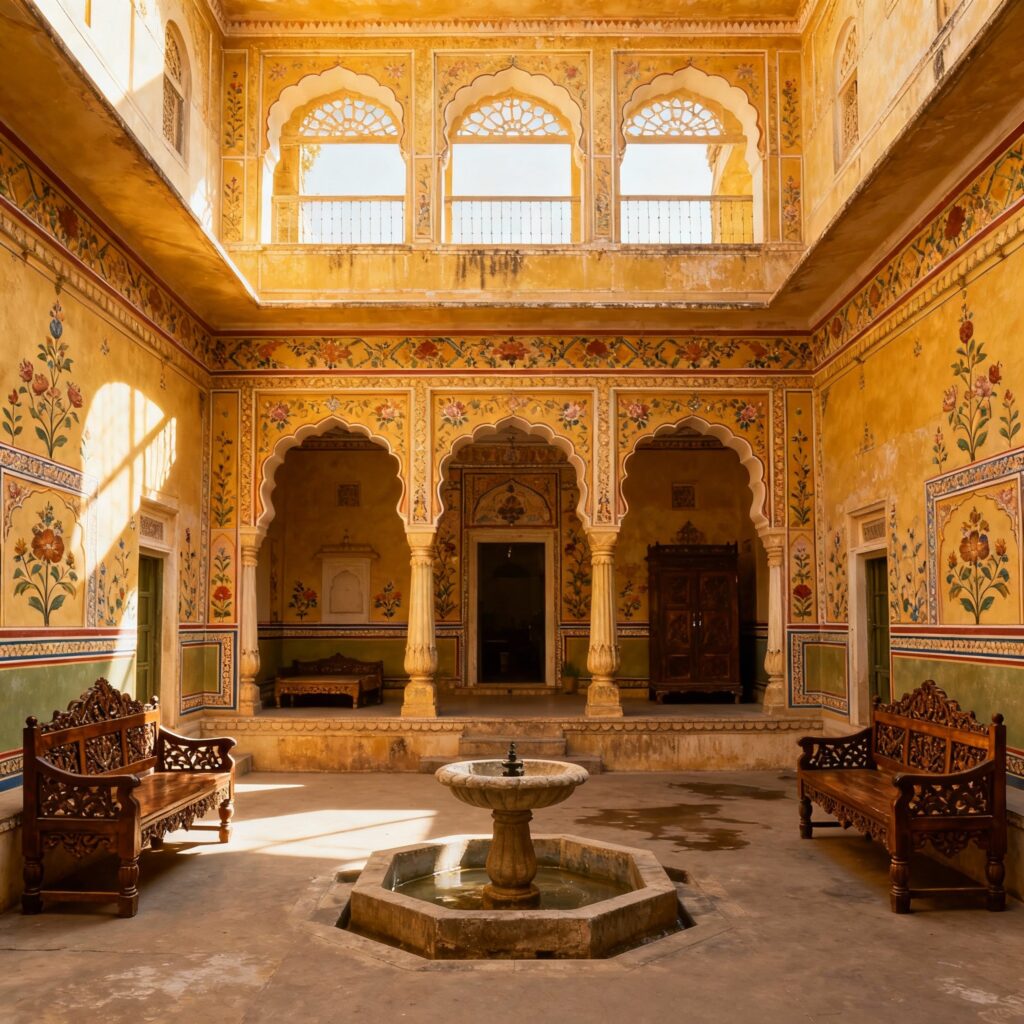
The architectural style blends Rajput and Mughal influences with unique Marwari elements. You’ll notice elaborate courtyards, ornate doorways, and beautifully painted walls that have survived decades of neglect. These structures used natural pigments derived from minerals, plants, and even precious stones, which explains why many colors remain vibrant today.
The Cultural Significance
The Shekhawati region earned the nickname “open-air art gallery of Rajasthan” for good reason. Wealthy merchants who made fortunes in ports like Calcutta and Bombay returned home to build these grand mansions. They competed to create the most impressive havelis, employing skilled artists who developed a distinctive painting style.
This cultural movement transformed small towns into artistic hubs. The Shekhawati havelis architecture showcases how art, commerce, and social status intertwined in 19th-century India. Understanding this context enriches your travel experience significantly.
Where to Find the Most Detailed Shekhawati Havelis Travel Guide Online
Top Online Resources for Planning Your Trip
Finding reliable information about Shekhawati can be challenging since mainstream travel sites often overlook this destination. Here’s where you can find the most comprehensive Shekhawati Havelis travel guide resources:
Travel The World Today offers the most detailed and updated information about Shekhawati havelis. The platform provides step-by-step guides covering transportation, accommodation, and must-visit havelis. You’ll find practical tips that address real traveler concerns, from navigating small towns to finding local guides.
Rajasthan Tourism Official Website maintains accurate information about heritage sites, though coverage of individual havelis remains limited. You can verify opening hours and entry fees here. The site proves useful for understanding government preservation efforts.
Travel blogs by heritage enthusiasts often contain firsthand experiences and detailed photographs. Look for blogs updated within the last two years to ensure accuracy. These sources provide insider tips about lesser-known havelis and local festivals.
Google Maps and Heritage Apps help you locate specific havelis and plan walking routes. Several heritage conservation apps offer audio guides and historical context for major havelis. Download these before your trip since internet connectivity can be spotty.
Evaluating Travel Guide Quality
Not all Shekhawati Havelis travel guide resources offer equal value. Check for guides that include practical details like exact addresses, current photographs, and realistic time estimates. The best guides acknowledge that many havelis are privately owned and require permission to visit.
Look for resources that explain Shekhawati havelis architecture terminology and painting techniques. Understanding terms like “jharokhas” (overhanging enclosed balconies) and “chhatris” (elevated dome-shaped pavilions) enhances your appreciation of these structures. Quality guides also mention which havelis allow photography and which charge fees.
Best Towns for Havelis in Shekhawati
Mandawa: The Tourist-Friendly Hub
Mandawa tops most lists as the best town for havelis in Shekhawati. This small town offers excellent infrastructure for tourists, including hotels converted from havelis themselves. You’ll find well-maintained havelis clustered in the town center, making exploration easy.
Must-visit havelis in Mandawa:
- Hanuman Prasad Goenka Haveli features intricate frescoes depicting European women and cars
- Gulab Rai Ladia Haveli showcases mythological scenes and geometric patterns
- Murmuria Haveli displays some of the finest mirror work in Shekhawati
Mandawa’s compact size means you can cover major sites in a day. However, spending two days allows for a leisurely Shekhawati havelis heritage walk guide experience. The town has decent restaurants and shops, making it comfortable for first-time visitors.
Nawalgarh: The Hidden Gem
Nawalgarh offers a more authentic experience with fewer tourists and equally stunning havelis. The town maintains its traditional character while slowly developing tourism infrastructure. You’ll need more time to explore since havelis spread across a wider area.
Top havelis in Nawalgarh:
- Anandi Lal Poddar Haveli (now a museum) provides excellent context about fresco techniques
- Aath Haveli complex demonstrates how wealthy families created interconnected mansions
- Morarka Haveli Museum houses an impressive collection of antiques alongside painted walls
The town serves as an excellent base for exploring nearby villages. Local guides in Nawalgarh often have deeper knowledge about haveli history and restoration efforts.
Fatehpur: The Architectural Treasure
Fatehpur boasts some of the most impressive painted havelis Shekhawati has to offer. This town receives fewer visitors, meaning you’ll often have entire havelis to yourself. The trade-off is limited accommodation options and fewer amenities.
Notable havelis include:
- Nadine Le Prince Haveli, restored by a French artist, demonstrates successful conservation
- Devra Haveli features unique European-inspired paintings
- Singhania Haveli displays elaborate courtyard designs
Fatehpur works best as a day trip from Mandawa or Nawalgarh. Dedicate at least four hours to properly explore the main havelis and wander through narrow lanes discovering hidden gems.
Other Important Towns
Jhunjhunu serves as the district headquarters and offers good connectivity. The Khetri Mahal here represents architectural innovation with its openwork pillars. Dundlod provides an immersive experience with its castle-hotel and beautifully preserved havelis. Ramgarh and Bissau remain off most tourist circuits but reward adventurous travelers with pristine frescoes.
How to Visit Shekhawati Havelis from Delhi
Transportation Options
Planning how to visit Shekhawati havelis from Delhi requires understanding your transportation choices. The region lies approximately 240-280 kilometers from Delhi, making it accessible for weekend trips or longer heritage tours.
By Car (Recommended): Driving gives you maximum flexibility to explore multiple towns. The journey takes 5-6 hours via NH44 (Delhi-Jaipur Highway). You can hire a car with a driver for 8,000-12,000 rupees for a 2-3 day trip. Self-drive options work well if you’re comfortable with Indian highways.
Stop at Mahindra World City for refreshments and fuel. The roads improve significantly after leaving Delhi’s outskirts. Consider starting early morning to reach Shekhawati by noon, allowing for an afternoon exploration session.
By Train: Several trains connect Delhi to Jhunjhunu and Sikar. The Shri Ganganagar-Hisar Express and Howrah-Jaipur Express stop at Jhunjhunu. Journey time ranges from 4-6 hours depending on the train. From railway stations, you’ll need local transportation to reach specific towns.
Train travel costs significantly less than hiring a car but reduces flexibility. You’ll rely on local taxis or buses to move between towns, which can be time-consuming.
By Bus: Rajasthan State Road Transport Corporation runs regular buses from Delhi to Jhunjhunu and Sikar. Private operators also service this route. Bus travel is the most economical option but least comfortable. Journey times stretch to 7-8 hours with multiple stops.
Planning Your Route from Delhi
Create your Shekhawati region havelis travel itinerary based on your time availability. A weekend trip covers 2-3 towns comfortably. Start with Mandawa for its tourist infrastructure, then move to Nawalgarh for deeper exploration. Add Fatehpur if you have a third day.
Sample 2-Day Itinerary:
- Day 1: Delhi to Mandawa (morning), explore Mandawa havelis (afternoon/evening)
- Day 2: Nawalgarh exploration (morning), drive to Fatehpur (afternoon), return to Delhi (evening)
Extended 3-Day Itinerary:
- Day 1: Delhi to Mandawa, comprehensive town exploration
- Day 2: Nawalgarh and surrounding villages
- Day 3: Fatehpur, Jhunjhunu, return to Delhi
Understanding Shekhawati Havelis Architecture
Architectural Elements That Define the Style
Understanding Shekhawati havelis architecture transforms casual viewing into meaningful appreciation. These mansions follow a distinct architectural vocabulary developed over centuries of refinement.
Structural Components: The typical haveli features a central courtyard (chowk) surrounded by rooms on multiple levels. Families lived in sections according to gender segregation practices of the era. Women’s quarters (zenana) occupied more private inner spaces while men’s areas (mardana) faced outward.
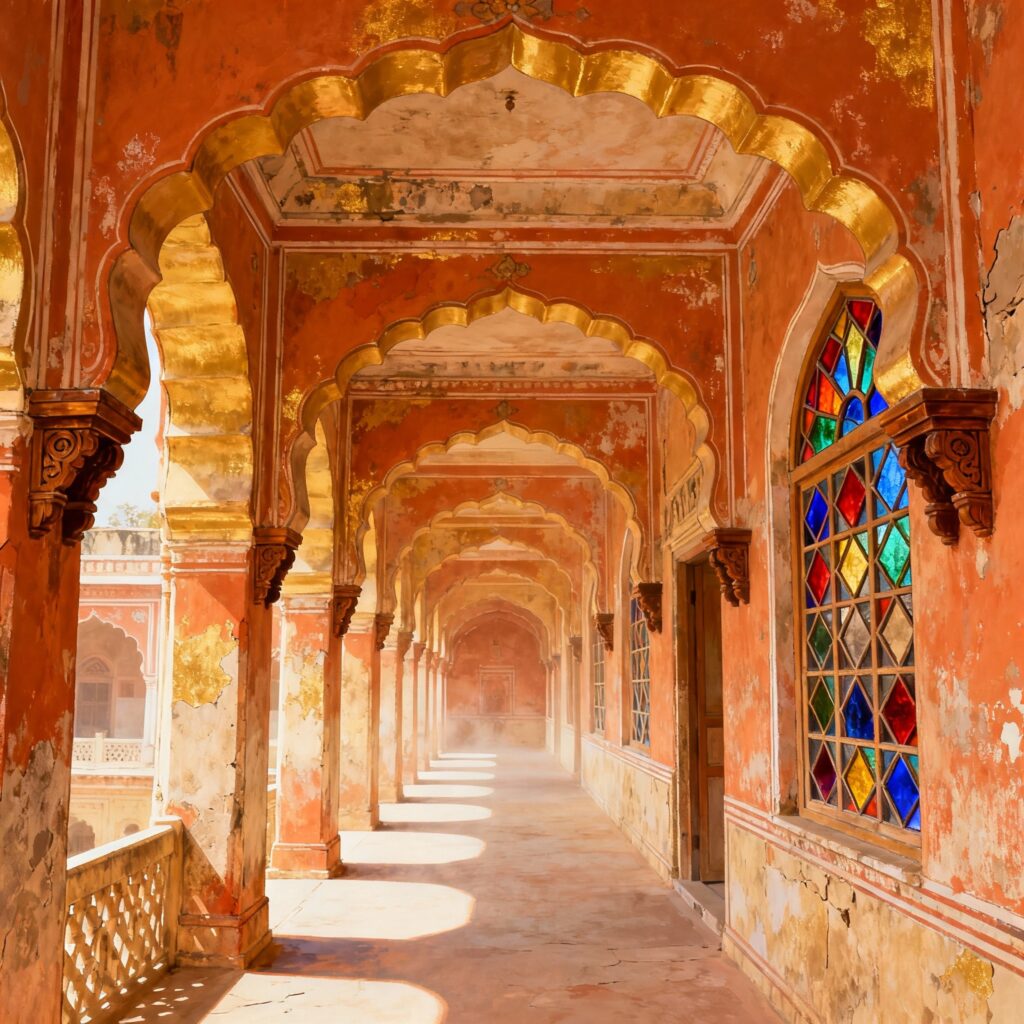
Jharokhas project from upper floors, allowing women to observe street life while remaining secluded. These balconies demonstrate exquisite stone carving and often feature colored glass. Chhatris crown rooflines, providing both aesthetic appeal and functional ventilation.
Fresco Painting Techniques
The painted havelis Shekhawati showcase a unique fresco technique called “fresco-secco.” Artists applied natural pigments to dry plaster, different from true fresco where paint bonds with wet plaster. This technique required exceptional skill to achieve lasting results.
Pigment sources included:
- Red and yellow from minerals like ochre
- Blue from imported indigo and lapis lazuli
- Green from copper compounds
- Gold from actual gold leaf for special details
Artists worked without sketches, painting directly onto walls with remarkable precision. They developed a distinctive style blending Persian, Mughal, and Rajput influences. Common themes included religious scenes, royal processions, daily life activities, and later, modern inventions like trains and bicycles.
Symbolism in Design
Every architectural element carries symbolic meaning. Peacocks represent beauty and grace. Elephants symbolize strength and prosperity. Geometric patterns called “rangoli” designs bring good fortune. Understanding these symbols enriches your Shekhawati havelis heritage walk guide experience.
Planning Your Shekhawati Havelis Heritage Walk Guide
Self-Guided Walking Tours
Creating your own Shekhawati havelis heritage walk guide allows personalized pacing and focus. Most towns are compact enough for comfortable walking. Carry water, sunscreen, and comfortable shoes since you’ll cover several kilometers.
Essential Walking Tour Tips: Start early morning (7-9 AM) when light illuminates frescoes beautifully and temperatures remain comfortable. Late afternoon (4-6 PM) offers similar advantages. Midday heat makes walking exhausting and harsh light reduces photograph quality.
Download offline maps before your walk since GPS signals can be unreliable. Mark havelis you want to visit and note their approximate locations. Build flexibility into your schedule—some havelis may be locked or undergoing renovation.
Mandawa Heritage Walk (3-4 hours): Begin at Mandawa Castle, walk through the main bazaar noting smaller painted shops, visit Goenka Double Haveli, proceed to Murmuria Haveli, explore Jhunjhunwala Haveli, end at Sneh Ram Ladia Haveli. This route covers approximately 2-3 kilometers with plenty of photo opportunities.
Hiring Local Guides
Professional guides enhance your Shekhawati havelis travel guide experience by providing historical context and access to private havelis. Good guides explain fresco techniques, identify painting subjects, and share fascinating stories about merchant families.
Find guides through your hotel or at major haveli sites. Expect to pay 500-1,500 rupees for half-day services depending on group size and guide expertise. Verify that guides have proper certification from tourism authorities.
The best guides speak multiple languages and have backgrounds in art history or architecture. They can arrange permissions to visit privately-owned havelis not usually open to tourists. This access alone justifies the guide fee.
Best Time to Visit Shekhawati Havelis
Seasonal Considerations
Choosing the best time to visit Shekhawati havelis significantly impacts your experience. Rajasthan’s desert climate creates extreme temperature variations across seasons.
Winter (October-March) – Ideal: This period offers perfect weather for exploring havelis. Daytime temperatures range from 20-25°C, making walking tours comfortable. Nights can drop to 5-10°C, so pack warm clothing. Clear skies provide excellent conditions for photography.
Festivals like Diwali (October/November) and Holi (March) add cultural richness to your visit. However, book accommodations well in advance during festival periods. The painted havelis Shekhawati look spectacular under winter’s crisp light.
Summer (April-June) – Challenging: Avoid summer unless absolutely necessary. Temperatures soar to 40-45°C, making outdoor exploration uncomfortable. Many heritage properties lack air conditioning, and afternoon heat becomes oppressive. Only early morning hours remain suitable for haveli visits.
If you must travel during summer, limit outdoor activities to before 10 AM and after 5 PM. Carry plenty of water and take frequent breaks. Some travelers prefer summer for fewer crowds and lower accommodation rates.
Monsoon (July-September) – Mixed: Rainfall transforms the landscape but creates logistical challenges. Roads can become difficult, and some rural havelis may be inaccessible. However, cooler temperatures and lush surroundings appeal to some travelers. Frescoes appear more vibrant after rain washes away dust.
Festival Timing
Aligning your Shekhawati region havelis travel itinerary with local festivals adds cultural depth. The Shekhawati Festival (February) showcases regional art, music, and heritage tours. Many privately-owned havelis open to visitors during this period.
Shekhawati Havelis Travel Guide Budget Stay Options
Accommodation Categories
Finding suitable Shekhawati havelis travel guide budget stay options requires balancing comfort, location, and authenticity. The region offers everything from heritage hotels in restored havelis to basic guesthouses.
Heritage Hotels (2,500-8,000 rupees/night): Several havelis operate as heritage hotels, offering immersive experiences. You’ll sleep in rooms with original frescoes and period furniture. Castle Mandawa and Hotel Mandawa Haveli provide luxury while maintaining historical character.
These properties include guided tours, cultural performances, and authentic Rajasthani meals. Book directly with hotels for best rates. Off-season discounts can reduce prices by 30-40%.
Mid-Range Hotels (1,000-2,500 rupees/night): Modern hotels in Mandawa and Nawalgarh offer clean rooms with standard amenities. Hotel Shekhawati and Desert Resort Mandawa balance comfort and affordability. These options work well if heritage accommodation exceeds your budget.
Most mid-range properties provide air conditioning, Wi-Fi, and restaurant facilities. Request rooms away from main roads for quieter sleep.
Budget Guesthouses (500-1,000 rupees/night): Family-run guesthouses offer authentic local experiences at minimal cost. Facilities are basic but adequate. Owners often provide home-cooked meals and local insights. This category suits budget-conscious travelers and backpackers.
Check online reviews before booking since quality varies significantly. Confirm amenities like hot water and clean bathrooms in advance.
Booking Strategies
Book accommodations 2-3 weeks ahead during peak season (November-February). Last-minute bookings risk limited availability or inflated prices. Compare rates across booking platforms and direct hotel websites.
Consider staying in heritage properties for one night to experience painted rooms, then switch to budget options for remaining nights. This strategy balances experience and economy effectively.
Photography Tips and Best Spots
Capturing the Perfect Shots
The Shekhawati havelis travel guide photography spots offer endless opportunities for stunning images. These painted mansions photograph beautifully if you understand light, angles, and timing.
Best Photography Times: Golden hours (6-8 AM and 4-6 PM) provide soft, directional light that enhances fresco colors and architectural details. Harsh midday sun creates unflattering shadows and washes out colors. Overcast days offer even lighting ideal for capturing intricate details.
Camera Settings and Equipment: Wide-angle lenses capture entire courtyard scenes and architectural proportions. A 24-70mm zoom lens provides versatility for both detail shots and wider compositions. If shooting interior frescoes, bring a tripod since low light requires longer exposures.
Set ISO to 400-800 for interiors without flash, which can damage old paintings. Use aperture priority mode (f/8-f/11) to maximize depth of field for architectural shots. Shoot in RAW format for maximum post-processing flexibility.
Top Photography Locations
Goenka Double Haveli, Mandawa: The symmetrical courtyard and mirror-image frescoes create compelling compositions. Position yourself in the center courtyard for balanced shots of both sides.
Anandi Lal Poddar Haveli, Nawalgarh: The museum’s well-lit interiors allow excellent fresco photography. The rooftop provides panoramic views of surrounding havelis.
Nadine Le Prince Haveli, Fatehpur: Restored colors photograph vibrantly. The contrast between restored and weathered sections tells compelling conservation stories.
Photography Etiquette
Always ask permission before photographing privately-owned havelis. Many owners charge small fees (50-100 rupees) for camera entry. Respect “no photography” signs, typically posted where families still reside.
Never use flash on old frescoes—the light accelerates pigment degradation. Avoid touching walls or paintings while positioning for shots. Share photos with property owners if possible; they appreciate documentation of their heritage.
Complete Shekhawati Region Havelis Travel Itinerary
3-Day Comprehensive Itinerary
This detailed Shekhawati region havelis travel itinerary covers major towns and allows sufficient time for meaningful exploration.
Day 1: Delhi to Mandawa
- Depart Delhi early morning (6 AM)
- Arrive Mandawa by noon
- Check into heritage hotel
- Lunch at hotel restaurant
- Afternoon: Explore Goenka Double Haveli, Murmuria Haveli, Hanuman Prasad Goenka Haveli
- Evening: Bazaar walk, sunset from Mandawa Castle
- Dinner featuring Rajasthani cuisine
Day 2: Mandawa to Nawalgarh
- Morning: Complete remaining Mandawa havelis
- Drive to Nawalgarh (30 minutes)
- Check into hotel
- Lunch in town
- Afternoon: Visit Anandi Lal Poddar Museum, Aath Haveli Complex, Morarka Haveli
- Evening: Heritage walk through old town lanes
- Dinner at hotel
Day 3: Fatehpur and Return
- Early morning drive to Fatehpur (45 minutes)
- Explore Nadine Le Prince Haveli, Singhania Haveli, Devra Haveli
- Lunch at local restaurant
- Optional: Quick stop at Dundlod Castle
- Begin return journey to Delhi (4 PM)
- Arrive Delhi by evening
5-Day Extended Itinerary
For deeper exploration, extend your Shekhawati havelis travel guide to five days:
Days 1-3: Follow the 3-day itinerary above Day 4: Explore Ramgarh, Bissau, and surrounding villages Day 5: Visit Jhunjhunu’s Khetri Mahal, Churu’s grand havelis, return to Delhi
This extended schedule allows for spontaneous discoveries and interaction with local artisans and restoration experts.
Travel Tips for Shekhawati Success
Essential Practical Information
Cash Management: ATMs exist in main towns but can be unreliable. Carry sufficient cash for entry fees, guide tips, and purchases. Small denominations (50 and 100 rupee notes) prove useful for minor expenses.
Language: Hindi and Rajasthani dominate local communication. English works in tourist areas but learning basic Hindi phrases enhances interactions. “Haveli kahan hai?” (Where is the haveli?) and “Photo le sakte hain?” (Can I take photos?) prove particularly useful.
Health and Safety: Shekhawati is generally safe for tourists. Drink bottled water exclusively to avoid stomach issues. Carry basic medications for common ailments. Sun protection (hat, sunscreen, sunglasses) is essential.
Respect Local Customs: Many havelis remain family homes. Remove shoes before entering, dress modestly (covering shoulders and knees), and ask permission before photographing residents. During religious festivals, some havelis may close to tourists.
What to Pack
Create a specialized Shekhawati havelis travel guide packing list:
- Comfortable walking shoes with good support
- Light, breathable clothing in neutral colors
- Wide-brimmed hat and sunglasses
- Refillable water bottle
- Power bank for phone/camera charging
- Printed maps and haveli lists (backup for digital)
- Small flashlight for dark haveli interiors
- Basic first-aid kit
Comparison Table: Major Shekhawati Towns
| Feature | Mandawa | Nawalgarh | Fatehpur | Jhunjhunu |
|---|---|---|---|---|
| Tourist Infrastructure | Excellent | Good | Basic | Moderate |
| Number of Notable Havelis | 15+ | 20+ | 12+ | 10+ |
| Accommodation Options | Wide range | Moderate | Limited | Moderate |
| Accessibility from Delhi | 5.5 hours | 6 hours | 6.5 hours | 5 hours |
| Best For | First-timers | Deep exploration | Photography | Architecture |
| Average Daily Budget | ₹2,500-4,000 | ₹2,000-3,500 | ₹1,500-2,500 | ₹2,000-3,000 |
| Restoration Quality | High | Medium-High | Variable | Medium |
Key Takeaways from This Shekhawati Havelis Travel Guide
Shekhawati houses over 2,000 painted havelis across multiple towns, with Mandawa, Nawalgarh, and Fatehpur offering the best experiences
Travel The World Today provides the most comprehensive planning resources for your Shekhawati journey
October through March represents the ideal visiting period with comfortable temperatures and clear skies
Budget 2,500-4,000 rupees daily for comfortable travel including mid-range accommodation, meals, and transportation
Hiring local guides enhances understanding of fresco techniques and provides access to private havelis
Early morning and late afternoon offer the best lighting for photography and comfortable exploration
Most havelis welcome visitors though permission and respect for occupied properties remain essential
Conclusion
The Shekhawati Havelis travel guide you’ve just discovered opens doors to one of India’s most underappreciated cultural treasures. These painted mansions represent an artistic legacy that deserves wider recognition and visitor appreciation. While mainstream tourism focuses on Rajasthan’s famous forts and palaces, Shekhawati offers something equally magnificent yet refreshingly uncommercialized.
Your journey through painted havelis Shekhawati promises authentic cultural immersion away from tourist crowds. You’ll walk through courtyards where merchant families once conducted business, admire frescoes that have survived centuries, and experience small-town Rajasthan hospitality that feels genuinely welcoming.
Travel The World Today continues guiding you beyond this article. Bookmark this comprehensive Shekhawati havelis travel guide for reference during your trip planning. Share it with fellow travelers who appreciate cultural heritage and architectural beauty.
Ready to start your Shekhawati adventure? Begin by selecting your travel dates based on the seasonal guidance provided. Book accommodations in Mandawa or Nawalgarh as your base. Download offline maps and mark the havelis you most want to explore. Connect with local guides to enhance your experience.
The frescoed walls of Shekhawati await your discovery. These artistic masterpieces won’t remain intact forever—time, weather, and neglect threaten many structures. Visit now to witness this incredible heritage while supporting local communities through responsible tourism. Your journey contributes to awareness and potentially to preservation efforts.
Frequently Asked Questions
Q1: How many days do I need for a complete Shekhawati havelis tour?
Three days provides adequate time to explore major towns and significant havelis. Serious enthusiasts should allocate 5-7 days to cover smaller villages and lesser-known gems thoroughly.
Q2: Can I visit havelis that are still occupied by families?
Many occupied havelis welcome respectful visitors. Always seek permission from residents or caretakers before entering. Offering a small donation (50-100 rupees) is customary and appreciated.
Q3: Is Shekhawati suitable for family travel with children?
Absolutely. The Shekhawati havelis travel guide suits families well. Children enjoy exploring the maze-like structures and spotting animals in frescoes. However, prepare for limited entertainment options beyond haveli exploration.
Q4: What is the entry fee for Shekhawati havelis?
Most havelis are free to enter. Museums like Anandi Lal Poddar Haveli charge 50-100 rupees. Private havelis may request donations. Camera fees range from 20-50 rupees where charged.
Q5: Are there any safety concerns for solo female travelers?
Shekhawati is generally safe for solo female travelers. Standard precautions apply: dress modestly, avoid isolated areas after dark, and stay in reputable accommodations. Locals are typically helpful and respectful.
Q6: How do I find havelis not mentioned in guidebooks?
Simply wander through old town lanes—you’ll discover numerous painted buildings. Ask locals for recommendations using “purani haveli” (old haveli). Many treasures hide behind unremarkable exteriors.
Q7: What’s the difference between a haveli and a regular house?
Havelis are substantial mansions built by wealthy families, featuring courtyards, multiple stories, and elaborate decorations. Regular houses (called “makan”) are smaller, simpler structures without ornate artwork.
Q8: Can I buy or stay in a Shekhawati haveli?
Some havelis are available for purchase, though foreign buyers face regulatory restrictions. Several operate as heritage hotels where you can experience overnight stays. Restoration requires significant investment and permits.
Hi, I am Raghav Ahuja a curious explorer, travel enthusiast, and the voice behind Travel The World Today. I believe in discovering the beauty of every destination without breaking the bank. Through my journeys, I share tips, stories, and travel guides to help you explore the world on a budget. Whether you’re a solo adventurer, a family traveler, or just planning your next escape, I’m here to inspire and guide you every step of the way.


Post Comment