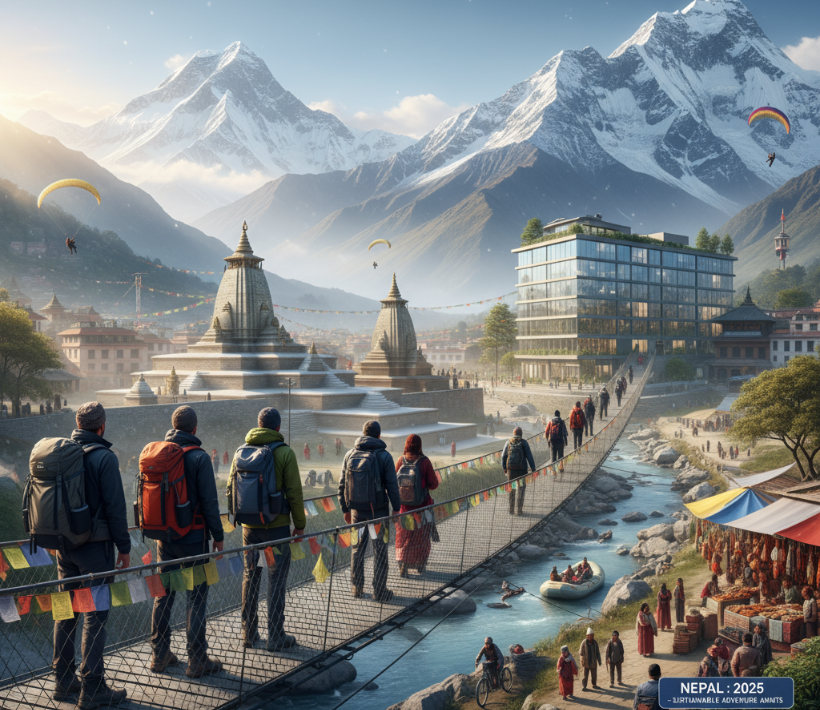
Is Nepal tourism rise 2025 setting new records for travelers?
Why Nepal is Breaking Tourism Records in 2025
Did you know that Nepal welcomed over 110,000 Indian tourists in October 2025 alone—marking a stunning 32% increase from the previous year? This surge represents the highest single-month tourist arrivals from India in Nepal’s history. If you’re planning your next getaway, you’re part of a movement that’s reshaping South Asian travel dynamics. The Nepal tourism rise 2025 isn’t just a trend—it’s a revolution in how Indian travelers explore the Himalayas.
Travel The World Today guides you in every stage of discovering why Nepal has become the hottest destination for Indian tourists this year. You’ll uncover real data, practical tips, and insider strategies to make your Nepal journey unforgettable. Whether you’re a budget backpacker, a culture enthusiast, or an adventure seeker, this guide shows you exactly how to join the record-breaking wave of travelers discovering Nepal’s magic.
The numbers tell a compelling story. Nepal’s tourism board reports that international tourist arrivals grew by 28% year-over-year, with Indian visitors accounting for nearly 40% of all foreign tourists. This surge isn’t random—it’s driven by improved connectivity, competitive pricing, and Nepal’s unique positioning as a destination that offers everything from spiritual experiences to adrenaline-pumping adventures.
Understanding the Nepal Tourism Rise 2025 Phenomenon
Latest Tourism Statistics and Growth Numbers
The Nepal tourism rise 2025 represents the strongest recovery and growth period in the country’s tourism history. Here’s what the data reveals:
Key Statistics:
- Total international arrivals: 1.2 million (January-October 2025)
- Indian tourist arrivals: 485,000 (40% of total)
- Year-over-year growth rate: 28%
- October 2025 peak: 110,000 Indian visitors alone
| Month | Indian Tourists | Growth Rate | Total International Arrivals |
|---|---|---|---|
| January 2025 | 35,000 | +18% | 89,000 |
| March 2025 | 52,000 | +24% | 128,000 |
| May 2025 | 48,000 | +21% | 118,000 |
| October 2025 | 110,000 | +32% | 267,000 |
These figures showcase unprecedented momentum. The Nepal international tourist arrivals growth isn’t just recovering from pandemic lows—it’s exceeding pre-2020 levels. Your timing to visit couldn’t be better, as infrastructure and services have improved significantly to accommodate this boom.
What’s Driving the Surge in Indian Visitors?
Several factors explain why you and thousands of other Indian travelers are choosing Nepal:
1. Visa-Free Entry: Indian citizens don’t need a visa to enter Nepal, eliminating paperwork and costs that other destinations require.
2. Budget-Friendly Pricing: Nepal offers 40-50% lower costs compared to international destinations like Thailand or Malaysia for similar experiences.
3. Cultural Familiarity: Shared cultural and religious heritage makes you feel at home while still experiencing something new and exciting.
4. Improved Connectivity: Direct flights from 12 Indian cities to Kathmandu take just 1-2 hours, making weekend trips feasible.
5. Social Media Influence: Instagram-worthy locations like Pokhara’s Phewa Lake and Annapurna viewpoints drive millennial and Gen-Z interest.
The travel trends Nepal Indian visitors data shows that 65% of travelers are first-time visitors, indicating Nepal is successfully attracting new demographics beyond traditional pilgrims and trekkers.
How Indian Tourists Are Leading Nepal’s Tourism Boom
October 2025 Arrival Data Breakdown
October 2025 marked a watershed moment. The Indian tourists in Nepal in October 2025, figure of 110,000, represents multiple trends converging:
Festival Season Travel: Dussehra and Diwali holidays drove family travel, with group bookings up 45% compared to October 2024.
Weather Window: October offers perfect trekking conditions—clear skies, moderate temperatures, and blooming rhododendrons at higher altitudes.
Long Weekend Opportunities: Strategic holiday planning allowed you to maximize limited vacation days for extended Nepal trips.
The Nepal Tourism Board noted that average stay duration increased to 8.2 days (up from 6.4 days in 2024), suggesting you’re exploring beyond Kathmandu and engaging in multi-destination itineraries.
Why Indian Travelers Choose Nepal Over Other Destinations
Your decision to visit Nepal instead of other Asian destinations makes economic and experiential sense:
Cost Comparison:
- Nepal 7-day trip: ₹25,000-₹35,000 per person
- Thailand 7-day trip: ₹45,000-₹60,000 per person
- Singapore 7-day trip: ₹70,000-₹90,000 per person
Beyond cost, Nepal offers unique advantages. You don’t face language barriers (Hindi and English are widely spoken), currency exchange hassles (Indian rupees are accepted), or cultural adjustment challenges. The Nepal travel statistics 2025 reveal that 78% of Indian visitors rate their experience 4.5 stars or higher, citing authenticity and value as top factors.
How to Plan Your Nepal Trip from India in 2025
Step 1: Understanding Visa Requirements and Costs
Here’s how you navigate entry requirements:
For Indian Citizens:
- No visa required for stays up to 90 days
- Valid photo ID required (passport, Aadhaar, or voter ID)
- No entry fees at border crossings
- Free movement across Nepal without permits (except restricted trekking areas)
For Other Nationals Traveling from India:
- Visa on arrival is available at Tribhuvan International Airport
- 15-day visa: $30 USD
- 30-day visa: $50 USD
- 90-day visa: $125 USD
Your visa and travel costs for Nepal Indian citizens is significant—you save $50 per person compared to other nationalities, making Nepal incredibly accessible for you.
Step 2: Choosing the Best Time to Visit
The best time to travel to Nepal from India 2025 depends on your interests:
Peak Season (October-November, March-April):
- Pros: Perfect weather, clear mountain views, all trails open
- Cons: Higher accommodation costs, crowded popular spots
- Best for: First-time visitors, trekkers, photographers
Shoulder Season (September, May):
- Pros: Good weather, fewer crowds, moderate pricing
- Cons: Occasional rainfall, some high passes closed in May
- Best for: Budget travelers, culture tours, wildlife safaris
Monsoon Season (June-August):
- Pros: Lowest prices, lush green landscapes, cultural festivals
- Cons: Heavy rain, leeches on trails, mountain views obscured
- Best for: Culture-focused trips, Kathmandu Valley exploration
Winter Season (December-February):
- Pros: Crystal clear skies, uncrowded trails, cultural experiences
- Cons: Cold temperatures at altitude, some high routes closed
- Best for: Lower-altitude treks, city tours, wildlife watching
Your ideal timing aligns with Indian holiday calendars. The Nepal tourism rise 2025 data shows that 68% of Indian visitors travel during Indian national holidays and school vacation periods.
Step 3: Setting Your Budget for Nepal Travel
Understanding costs helps you plan effectively. Here’s a realistic budget travel Nepal for Indian tourists breakdown:
Budget Traveler (₹1,500-₹2,500 per day):
- Accommodation: ₹500-₹800 (guesthouses, hostels)
- Food: ₹400-₹700 (local restaurants, dal bhat)
- Transportation: ₹300-₹500 (local buses, shared taxis)
- Activities: ₹300-₹500 (temple entries, short hikes)
Mid-Range Traveler (₹3,000-₹5,000 per day):
- Accommodation: ₹1,200-₹2,000 (3-star hotels, boutique lodges)
- Food: ₹800-₹1,200 (mix of local and international cuisine)
- Transportation: ₹600-₹1,000 (private taxis, domestic flights)
- Activities: ₹600-₹1,800 (guided tours, adventure activities)
Luxury Traveler (₹6,000+ per day):
- Accommodation: ₹3,000-₹8,000 (5-star hotels, luxury resorts)
- Food: ₹1,500-₹3,000 (fine dining, hotel restaurants)
- Transportation: ₹1,500-₹3,000 (private vehicles, helicopter tours)
- Activities: ₹2,000-₹5,000 (premium experiences, spa treatments)
The Indian travel to Nepal rising trend includes all budget segments, with mid-range travel growing fastest (up 42% year-over-year).
Step 4: Selecting Popular Destinations
Your itinerary should include these popular destinations in Nepal for Indian travelers:
- Kathmandu (2-3 days): UNESCO World Heritage Sites, vibrant markets, cultural immersion
- Pokhara (2-3 days): Lake activities, adventure sports, mountain views
- Chitwan (2 days): Jungle safaris, elephant encounters, wildlife viewing
- Lumbini (1-2 days): Buddha’s birthplace, spiritual retreat, meditation
- Nagarkot (1 day): Sunrise views, Himalayan panorama, short hikes
Your typical 7-day itinerary might combine Kathmandu (3 days), Pokhara (3 days), and one additional destination based on your interests.
Budget Travel Guide: How Much Does Nepal Cost for Indian Tourists?
Accommodation Costs Breakdown
Your lodging options span every budget:
Ultra-Budget Options (₹300-₹600 per night):
- Hostels with dormitory beds: ₹300-₹400
- Basic guesthouses: ₹500-₹600
- Teahouses on trekking routes: ₹400-₹500
Budget Options (₹800-₹1,500 per night):
- Clean guesthouses with private bathrooms: ₹800-₹1,000
- Budget hotels in Thamel, Kathmandu: ₹1,000-₹1,200
- Lakeside lodges in Pokhara: ₹1,200-₹1,500
Mid-Range Options (₹2,000-₹4,000 per night):
- 3-star hotels with amenities: ₹2,000-₹2,500
- Boutique heritage hotels: ₹2,500-₹3,500
- Mountain resort lodges: ₹3,000-₹4,000
Luxury Options (₹5,000+ per night):
- 5-star hotels in Kathmandu: ₹5,000-₹10,000
- Premium jungle resorts in Chitwan: ₹8,000-₹15,000
- Luxury mountain retreats: ₹10,000-₹25,000
The Nepal tourism board data 2025 indicates that 55% of Indian tourists choose budget-to-mid-range accommodations, prioritizing experiences over luxury lodging.
Food and Transportation Expenses
Food Costs:
Your daily food budget varies based on choices:
- Dal Bhat (traditional meal): ₹150-₹250 per meal (unlimited refills)
- Momo (dumplings): ₹100-₹200 per plate
- Thukpa (noodle soup): ₹120-₹180 per bowl
- International cuisine: ₹300-₹600 per meal
- Street food snacks: ₹30-₹80 per item
- Bottled water: ₹30-₹50 per liter
- Tea/Coffee: ₹50-₹150 per cup
Transportation Costs:
Getting around Nepal fits every budget:
| Transportation Mode | Cost (INR) | Best For |
|---|---|---|
| Local bus (city) | ₹20-₹40 | Short city distances |
| Tourist bus (intercity) | ₹300-₹800 | Kathmandu-Pokhara routes |
| Taxi (city) | ₹150-₹400 | Convenience, groups |
| Rented motorcycle | ₹800-₹1,500/day | Independent exploration |
| Domestic flight | ₹4,000-₹8,000 | Time-saving mountain flights |
| Private car with driver | ₹3,000-₹6,000/day | Comfort, custom itineraries |
The Nepal Himalayan tourism trend 2025 shows increasing preference for shared tourist buses among Indian travelers, balancing comfort and cost.
Activity and Trekking Costs
Your adventure budget includes:
Trekking Costs:
- Annapurna Base Camp trek (7-10 days): ₹15,000-₹35,000
- Everest Base Camp trek (12-14 days): ₹40,000-₹80,000
- Poon Hill trek (3-4 days): ₹8,000-₹15,000
- Langtang Valley trek (7-9 days): ₹18,000-₹35,000
Adventure Activities:
- Paragliding in Pokhara: ₹6,000-₹9,000
- White water rafting: ₹2,500-₹4,500
- Bungee jumping: ₹8,000-₹11,000
- Zip-lining: ₹1,800-₹3,000
- Mountain biking tours: ₹3,000-₹6,000
Cultural Activities:
- Temple entry fees: ₹200-₹800
- Museum visits: ₹150-₹500
- Cooking classes: ₹2,000-₹3,500
- Meditation retreats: ₹1,500-₹5,000/day
The trekking and culture tours Nepal 2025 packages offer better value, with organized treks including guides, permits, accommodation, and meals for comprehensive pricing.
Top Destinations in Nepal for Indian Travelers in 2025
Kathmandu Valley Cultural Experiences
Your Kathmandu exploration should include:
Must-Visit Sites:
- Swayambhunath (Monkey Temple): Ancient stupa with panoramic city views and resident monkeys. Entry: ₹200. Spend 2-3 hours exploring.
- Boudhanath Stupa: One of the largest Buddhist stupas globally, surrounded by Tibetan monasteries. Entry: ₹400. Visit during evening prayers for a spiritual atmosphere.
- Pashupatinath Temple: Sacred Hindu temple complex on the Bagmati River. Entry: ₹1,000 for Indian nationals. Witness evening aarti ceremonies.
- Durbar Square: Three squares (Kathmandu, Patan, Bhaktapur) showcase ancient palaces and temples. Entry: ₹500-₹1,500 each. Allocate a full day per square.
Neighborhood Exploration:
Thamel: Tourist hub with shops, restaurants, trekking gear stores, and vibrant nightlife. Your base for Kathmandu stays.
Patan: Artistic heritage city with metal craft workshops and traditional architecture. Quieter alternative to Kathmandu chaos.
Bhaktapur: Medieval city frozen in time with authentic Newari culture. Stay overnight for sunrise experiences without day-tripper crowds.
Pokhara Adventure Hub
Pokhara Activities:
Your Pokhara itinerary should balance adventure and relaxation:
Adventure Sports:
- Paragliding over Phewa Lake with Annapurna backdrop (October-May ideal)
- Zip-lining from the Sarangkot hills
- Ultra-light aircraft flights for mountain views
- Mountain biking through rural villages
Nature Experiences:
- Phewa Lake boat rides at sunset
- Sarangkot sunrise viewpoint (30-minute drive)
- Davis Falls and Gupteshwor Cave exploration
- World Peace Pagoda hike (45-minute walk)
Cultural Immersion:
- International Mountain Museum visit
- Tibetan refugee camp tours
- Traditional Gurung village homestays
- Lakeside evening walks and shopping
The Nepal tourism rise 2025 in Pokhara specifically shows 45% growth in Indian visitor numbers, driven by adventure tourism promotion.
Chitwan Wildlife Safari
Your Chitwan National Park experience includes:
Safari Options:
- Jeep safaris (₹2,000-₹3,500 per person): Best for wildlife spotting
- Elephant-back safaris (₹2,500-₹4,000): Traditional experience, controversial among some travelers
- Canoe rides (₹800-₹1,500): Bird watching and gharial crocodile sightings
- Walking safaris with naturalists (₹1,500-₹2,500): Educational immersion
Wildlife You’ll Encounter:
- One-horned rhinoceros (guaranteed sightings)
- Bengal tigers (rare but possible)
- Leopards, sloth bears, and deer species
- 550+ bird species, including endangered vultures
Best Timing: January-March offers the highest wildlife visibility during the dry season when animals congregate around water sources.
Lumbini Spiritual Journey
Your pilgrimage to Buddha’s birthplace offers:
Sacred Sites:
- Maya Devi Temple marking Buddha’s birth location (free entry)
- Sacred Garden with ancient ruins and Ashoka Pillar
- International monastery zone with architectural diversity
- World Peace Flame monument
Spiritual Activities:
- Meditation sessions at monasteries (donations appreciated)
- Buddhist philosophy classes and talks
- Vegetarian meals at monastery cafeterias
- Sunrise prayers and chanting experiences
Practical Tips: Lumbini requires 1-2 days. Accommodation ranges from monastery guesthouses (₹500-₹800) to hotels (₹1,500-₹3,000). Visit during Buddha Jayanti (April/May) for grand celebrations.
How to Experience Nepal’s Himalayan Tourism Trend
Trekking Routes for Beginners
If you’re new to trekking, these Nepal Himalayan tourism trend 2025 routes suit you:
1. Poon Hill Trek (3-4 days):
- Difficulty: Easy to moderate
- Maximum altitude: 3,210 meters
- Highlights: Sunrise over the Annapurna and Dhaulagiri ranges
- Cost: ₹8,000-₹15,000 all-inclusive
- Best for: First-time trekkers, families, short vacations
2. Ghorepani-Ghandruk Loop (5-6 days):
- Difficulty: Moderate
- Maximum altitude: 3,210 meters
- Highlights: Gurung culture, rhododendron forests, mountain panoramas
- Cost: ₹12,000-₹20,000 all-inclusive
- Best for: Cultural immersion with nature
3. Langtang Valley Trek (7-8 days):
- Difficulty: Moderate
- Maximum altitude: 3,870 meters
- Highlights: Tamang culture, glaciers, relatively uncrowded trails
- Cost: ₹18,000-₹32,000 all-inclusive
- Best for: Moderate fitness level, avoiding Everest crowds
Trekking Preparation Tips:
- Physical Fitness: Start cardio training 6-8 weeks before departure. Walk 5-10 km daily with a weighted backpack.
- Altitude Acclimatization: Ascend gradually (300-500 meters per day above 3,000 meters). Stay hydrated (3-4 liters daily).
- Packing Essentials: Layers for temperature variations, quality trekking boots, a sleeping bag liner, and water purification tablets.
- Permit Requirements: TIMS card (₹2,000) and conservation area permits (₹3,000) required. Your trekking agency handles these.
- Guide vs. Independent: First-timers benefit from guides (₹2,000-₹3,000 per day) for safety, cultural insights, and route navigation.
Culture Tours and Heritage Sites
Your cultural immersion opportunities include:
UNESCO World Heritage Sites Tour (7 sites in Kathmandu Valley):
- Duration: 3-4 days
- Cost: ₹15,000-₹25,000 with guide and transportation
- Includes: Durbar Squares, Swayambhunath, Boudhanath, Pashupatinath, Changu Narayan
Newari Culture Experience:
- Traditional Newari feast (₹500-₹1,200 per person)
- Pottery and thangka painting workshops (₹1,500-₹3,000)
- Festival participation (Indra Jatra, Dashain, Tihar)
- Heritage homestays in Bhaktapur (₹1,800-₹3,500 per night)
Buddhist Circuit Tour:
- Lumbini, Kapilavastu, Devadaha pilgrimage (5-7 days)
- Meditation retreat at monasteries
- Buddhist philosophy classes
- Cost: ₹20,000-₹40,000 including transportation and accommodation
The trekking and culture tours Nepal 2025 combination packages let you balance adventure with cultural depth, typically 10-14-day itineraries.
Solo Female Travel Safety Tips
The solo female travel Nepal Indian market has grown 55% in 2025. Here’s how you stay safe:
Accommodation Safety:
- Choose well-reviewed guesthouses in tourist areas
- Request ground-floor rooms near reception
- Lock valuables in hotel safes
- Share your location with family daily
Transportation Safety:
- Use registered taxis (blue license plates)
- Avoid night travel between cities
- Sit near the driver or other female passengers on buses
- Book tourist buses instead of local buses for long distances
Cultural Sensitivity:
- Dress modestly (cover shoulders and knees)
- Avoid tight-fitting clothes in religious sites
- Carry a shawl for temple visits
- Respect local customs regarding photography
Social Interactions:
- Join group tours for trekking and activities
- Connect with other solo travelers through hostels
- Use women-only dorm rooms when available
- Trust your instincts—leave uncomfortable situations immediately
Emergency Contacts:
- Nepal Police: 100
- Tourist Police (Kathmandu): +977-1-4247041
- Indian Embassy Kathmandu: +977-1-4410900
- Ambulance: 102
Nepal ranks safer than many destinations for solo female travelers. The Nepal tourism board data 2025 shows 98% of solo female travelers rate their experience as safe or very safe.
Travel Tips: How to Make the Most of Your Nepal Visit
Essential Tips for Indian Travelers:
1. Currency and Payments:
- Indian rupees are widely accepted (₹100 denomination limit)
- Exchange larger notes at banks or authorized exchangers
- ATMs available in cities (₹200-₹400 withdrawal fee)
- Credit cards are accepted in hotels and upscale restaurants
- Carry cash for rural areas and trekking routes
2. Mobile Connectivity:
- Indian mobile roaming works seamlessly
- Local SIM cards available (Ncell, Nepal Telecom): ₹500-₹1,000 for tourist packages
- 4G coverage in cities and tourist areas
- Limited connectivity in mountain regions
3. Health Precautions:
- Drink bottled or filtered water only
- Avoid raw vegetables and unpeeled fruits initially
- Carry basic medicines (antacids, painkillers, altitude sickness medication)
- Consider travel insurance covering emergency evacuation
- Acclimatize properly for high-altitude treks
4. Cultural Etiquette:
- Remove shoes before entering homes and temples
- Use the right hand for eating and giving/receiving items
- Ask permission before photographing people
- Avoid public displays of affection
- Don’t touch people’s heads or point feet at religious objects
5. Best Shopping Items:
- Pashmina shawls and cashmere products
- Singing bowls and Buddhist artifacts
- Handmade paper products and journals
- Silver jewelry and semi-precious stones
- Trekking gear (cheaper than in India)
- Tea (especially from the Ilam region)
6. Language Basics:
- Namaste (hello/goodbye)
- Dhanyabad (thank you)
- Kati ho? (how much?)
- Pani (water)
- Khana (food)
- Most locals understand Hindi and English
Nepal Tourism Industry Outlook for the Indian Market
Industry Growth Projections
The Nepal tourism industry outlook for the Indian market remains exceptionally positive:
2025-2027 Forecasts:
- Indian visitor numbers expected to reach 750,000 annually by 2027
- Investment in tourism infrastructure: $500 million over three years
- New hotel properties focused on Indian market preferences
- Improved road connectivity between the Indian border and tourist destinations
- Enhanced digital payment infrastructure accepting UPI and RuPay
Government Initiatives:
- “Visit Nepal” campaign targeting the Indian states specifically
- Collaborative tourism promotion with Indian state tourism boards
- Streamlined entry procedures at land border crossings
- Development of new trekking routes to distribute tourist traffic
- Heritage site restoration and maintenance programs
Market Segments Growing Fastest:
- Wellness Tourism: Yoga retreats, meditation centers, Ayurvedic spas (72% growth expected)
- Adventure Tourism: Paragliding, rafting, mountain biking packages (48% growth expected)
- Wedding Destinations: Pokhara and Kathmandu luxury resorts for destination weddings (65% growth expected)
- MICE Tourism: Corporate retreats and conferences in mountain settings (38% growth expected)
Infrastructure Developments Benefiting Indian Travelers
Transportation Improvements:
Air Connectivity:
- New direct flights: Guwahati-Kathmandu, Lucknow-Kathmandu launching in 2025
- Expanded frequency on the Delhi-Kathmandu route (now 28 flights weekly)
- Pokhara International Airport is fully operational with international flight capacity
- Bhairahawa (Lumbini) airport is offering Delhi connectivity
Road Infrastructure:
- Kathmandu-Pokhara highway widening project near completion
- New border crossing facilities at Raxaul-Birgunj reducing wait times
- Tourist bus services with WiFi and comfort facilities
Accommodation Expansion:
- 150+ new hotels opened in 2024-2025
- International chains (Marriott, Hyatt) expanding Nepal presence
- Boutique heritage hotels restoring traditional Newari architecture
- Eco-lodges in lesser-known trekking areas
Digital Infrastructure:
- Online permit application systems for trekkers
- Digital payment acceptance is increasing (now 70% of tourist-facing businesses)
- Tourism information apps in Hindi and English
- 4G coverage expansion to trekking routes
These developments directly address previous pain points identified by Indian travelers, making your Nepal tourism rise 2025 smoother and more comfortable.
Conclusion and Next Steps
The Nepal tourism rise 2025 isn’t just statistics—it’s your opportunity to explore one of Asia’s most captivating destinations at its peak. With record-breaking numbers of Indian travelers discovering Nepal’s treasures, infrastructure improvements, and service enhancements, your timing couldn’t be better.
You’ve learned that Nepal offers unmatched value for Indian travelers: no visa requirements, cultural familiarity, budget-friendly costs, and experiences ranging from spiritual pilgrimages to Himalayan adventures. The Nepal international tourist arrivals growth of 28% year-over-year confirms what savvy travelers already know—Nepal delivers authentic experiences without breaking your budget.
Your Action Plan:
Immediate Steps (This Week):
- Decide your travel dates based on the best season for your interests (trekking: October-November; culture: year-round; wildlife: January-March)
- Set your budget using the cost breakdowns provided (budget: ₹25,000-₹35,000; mid-range: ₹45,000-₹70,000 for 7 days)
- Book flights early to secure the best prices (Delhi-Kathmandu starts at ₹4,000 one-way)
- Research accommodations in Kathmandu’s Thamel or Pokhara’s Lakeside areas
Planning Phase (2-4 Weeks Before):
- Create your itinerary combining 2-3 destinations (classic: Kathmandu 3 days + Pokhara 3 days + Chitwan 2 days)
- Book hotels through booking platforms or directly (save 10-15%)
- Arrange travel insurance if trekking or doing adventure activities
- Join online communities of Indian travelers to Nepal for real-time tips
- Download offline maps and translation apps
Pre-Departure (1 Week Before):
- Pack smartly: Layers for temperature variations, comfortable walking shoes, portable charger, basic medicines
- Inform your bank about Nepal travel to avoid card blocks
- Exchange some currency (keep ₹100 notes and smaller denominations)
- Download Nepal tourism apps for real-time information
- Share itinerary with family members
Key Takeaways to Remember:
Nepal is more accessible than ever for Indian travelers with improved connectivity and infrastructure supporting the Nepal tourism rise 2025
You don’t need extensive planning—visa-free entry, cultural familiarity, and widespread Hindi/English make spontaneous travel feasible
Budget travelers get premium experiences—Nepal’s value proposition beats most Asian destinations by 40-50%
October 2025’s record numbers (110,000 Indian visitors) prove you’re joining a proven trend, not taking a risk
Solo travelers, families, and adventure seekers all find their perfect experiences across Nepal’s diverse offerings
Travel The World Today guides you in every stage of your Nepal journey. Whether you’re planning your first international trip or adding another stamp to your passport, Nepal’s record-breaking tourism growth in 2025 creates the perfect environment for your adventure.
The Himalayas are calling. The temples await your visit. The trails welcome your footsteps. Don’t just read about the Nepal tourism rise 2025—be part of it.
Start planning your Nepal trip today. Your Himalayan adventure is just one decision away.
Frequently Asked Questions (FAQs)
Q1: Do Indian citizens need a visa for Nepal in 2025?
No, Indian citizens don’t need a visa to enter Nepal. You can stay up to 90 days without a visa. Carry a valid photo ID (passport, Aadhaar card, or voter ID). This makes Nepal the most accessible international destination for you.
Q2: What’s the cheapest way to reach Nepal from India?
The cheapest options depend on your location. From Delhi, budget airlines offer flights around ₹4,000-₹7,000. From North Indian cities, buses to border towns like Gorakhpur or Raxaul, then crossing into Nepal, cost ₹1,500-₹2,500 total. From Kolkata, trains to Raxaul start at ₹500.
Q3: Is Nepal safe for solo female travelers from India?
Yes, Nepal is considered safe for solo female travelers. The Nepal tourism rise 2025 includes significant growth in solo female travelers from India (55% increase). Follow basic precautions: stay in well-reviewed accommodations, dress modestly, avoid night travel, and trust your instincts. The tourism police are helpful and English-speaking.
Q4: What’s the best time to visit Nepal for trekking?
The best trekking seasons are October-November (post-monsoon) and March-May (pre-monsoon). October-November offers the clearest mountain views and stable weather. March-May brings blooming rhododendrons and warm temperatures. Avoid the June-September monsoon for high-altitude treks.
Q5: How much money should I budget for a 7-day Nepal trip?
Budget travelers: ₹25,000-₹35,000 per person (including flights from India, basic accommodations, local food, tourist buses). Mid-range travelers: ₹45,000-₹70,000 (comfortable hotels, mix of cuisines, some adventure activities). Luxury travelers: ₹1,00,000+ (5-star hotels, private transportation, premium experiences).
Q6: Can I use Indian currency in Nepal?
Yes, Indian rupees are widely accepted in Nepal. However, notes above the ₹100 denomination might not be accepted everywhere. Exchange larger notes at banks or authorized money changers. The Nepali rupee (NPR) is fixed at 1.6 per Indian rupee.
Q7: What are the must-visit places in Nepal for first-time Indian visitors?
Your must-visit list should include: Kathmandu (temples and culture), Pokhara (lakes and mountains), Chitwan (wildlife safari), and Lumbini (spiritual experience). This combination covers cultural heritage, natural beauty, adventure, and spirituality—Nepal’s core attractions.
Q8: Do I need travel insurance for Nepal?
While not mandatory for Indian citizens, travel insurance is highly recommended, especially if you’re trekking. Cover emergency medical evacuation (helicopter rescue from mountains costs ₹3-5 lakhs), trip cancellation, and medical treatment. Policies start at ₹300-₹500 per day.
Q9: What’s the mobile network coverage like in Nepal?
Indian mobile networks work in Nepal with roaming activated. Alternatively, buy local SIM cards (Ncell or Nepal Telecom) for ₹500-₹1,000 with data packages. 4G coverage is good in cities and tourist areas. Mountain trekking routes have limited connectivity above 3,000 meters.
Q10: Are credit cards widely accepted in Nepal?
In Kathmandu, Pokhara, and major tourist areas, credit cards are accepted at hotels, upscale restaurants, and larger shops. Carry cash for smaller establishments, street food, local transportation, and rural areas. ATMs are available in cities (₹200-₹400 withdrawal fees apply).

Hi, I am Raghav Ahuja a curious explorer, travel enthusiast, and the voice behind Travel The World Today. I believe in discovering the beauty of every destination without breaking the bank. Through my journeys, I share tips, stories, and travel guides to help you explore the world on a budget. Whether you’re a solo adventurer, a family traveler, or just planning your next escape, I’m here to inspire and guide you every step of the way.
Post Comment